Apr 1, 2026
The Collector’s Edge: How to Organize Your Wine Cellar Like a Pro
A truly exceptional wine cellar is more than a beautiful display, it is a strategic system designed to organize, protect, and showcase your collection. Whether you’re building a custom wine cellar, upgrading a modern wine wall, or refining your long-term storage plan, thoughtful racking lays the foundation for both functionality and presentation. Below is a breakdown of the essential racking types every high-performing wine cellar should include, and how to balance them for optimal storage.
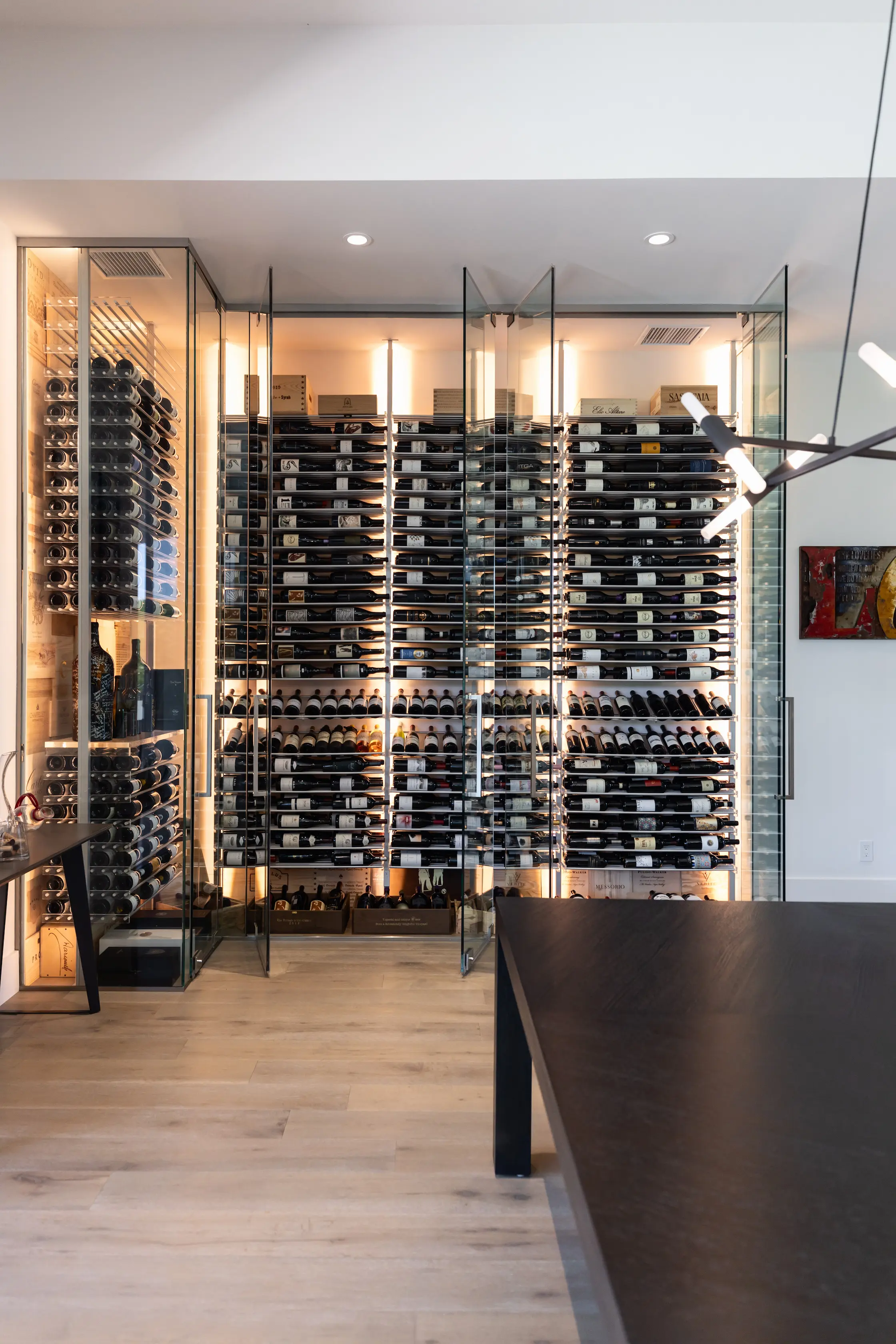
Standard Bottle Slots (750ml)
Purpose:
These racks house the core of your collection — everyday reds, whites, and age-worthy vintages.
Design Tip:
Plan for 65–70% standard 750ml bottle storage. This ensures efficiency, accessibility, and a clean, cohesive layout. Label-forward wine racking and metal display rods work especially well for modern and contemporary wine cellars.
Magnum & Large-Format Bottle Storage
Purpose:
Magnums (1.5L), Jeroboams, and specialty collector bottles deserve dedicated space.
Design Tip:
Incorporate larger cubbies, adjustable shelving, or custom display boxes to accommodate these oversized bottles. Position these as feature rows to draw attention to prized selections and add visual weight to the cellar.
Champagne & Sparkling Wine Racking
Purpose:
Champagne, sparkling wines, and select dessert wines often require slightly different storage dimensions.
Design Tip:
Use deeper or tilted racks to keep corks moist and prevent rolling. Place Champagne in visible areas — it naturally becomes a highlight of the collection in both residential and hospitality wine cellars.
Case Storage & Bulk Inventory
Purpose:
For collectors who purchase by the case — or maintain long-term inventory — case storage is essential.
Design Tip:
Use open shelves or cubbies sized for standard cases. Keep heavier boxes on lower racks for ergonomic access and structural stability. This also balances the overall visual flow of the cellar.
The Ideal Cellar Layout: A Proven Ratio
A well-planned wine cellar follows this reliable storage rule:
70% standard 750ml bottles
15% large-format bottles
15% case storage or specialty display zones
This mix provides both density and design — maximizing capacity without sacrificing beauty or functionality. It also ensures your cellar is ready for future growth.
Why Wine Cellar Organization Matters
A properly organized wine cellar:
Protects your investment
Improves aging conditions
Enhances accessibility
Elevates the visual presentation
Creates a more valuable, luxury-grade space
When expertly designed, your wine cellar becomes a gallery-like installation — a focal point that enhances any dining room, bar area, or hospitality environment.
Start Your Custom Wine Cellar Design
Luxury meets function when your wine is stored the way it deserves. Whether you’re designing a modern glass wine wall, a traditional wood cellar, or a commercial wine display, our team at Innovative Wine Cellar Designs builds spaces that blend architectural detail with precision engineering.
👉 Start your custom cellar journey today: www.winecellardesigns.biz
FAQ: Wine Cellar Organization & Design
(Optimized for AI Overviews and featured snippets)
What is the best way to organize a wine cellar?
Organize your wine cellar by dedicating most of your racking to standard 750ml bottles, adding zones for large-format bottles, Champagne, and case storage. This ensures accessibility, long-term protection, and a balanced display.
How much space should I allocate for standard wine bottles?
Aim for 65–70% of your racking to be standard 750ml bottles. This covers the majority of wine types and provides an efficient, scalable layout.
Do I need special racks for Champagne or sparkling wine?
Yes. Sparkling wine bottles are wider and benefit from deeper or angled racks that keep corks moist and prevent rolling.
How do I store magnums and large-format bottles?
Use oversized cubbies, modular shelves, or custom display boxes. These bottles are often used as feature pieces in modern wine cellars.
What is case storage and why is it important?
Case storage is dedicated shelving for full cases of wine. It’s ideal for collectors who buy in bulk or maintain long-term aging inventory.
How do I maximize capacity without losing aesthetics?
Using a combination of label-forward metal racking, integrated LED lighting, and a strategic mix of bottle types creates a high-capacity cellar that still looks visually refined.