Mar 15, 2026
How a Wine Cellar Can Elevate the Hospitality Guest Experience
In luxury hospitality, every design decision contributes to how a guest feels, remembers, and values their stay. One of the most overlooked opportunities for impact? A custom hospitality wine cellar. Across our hotel, resort, and restaurant projects, we’ve seen firsthand that a wine cellar is no longer “storage.” It’s a signature design feature, a revenue driver, and a defining element of the guest experience.
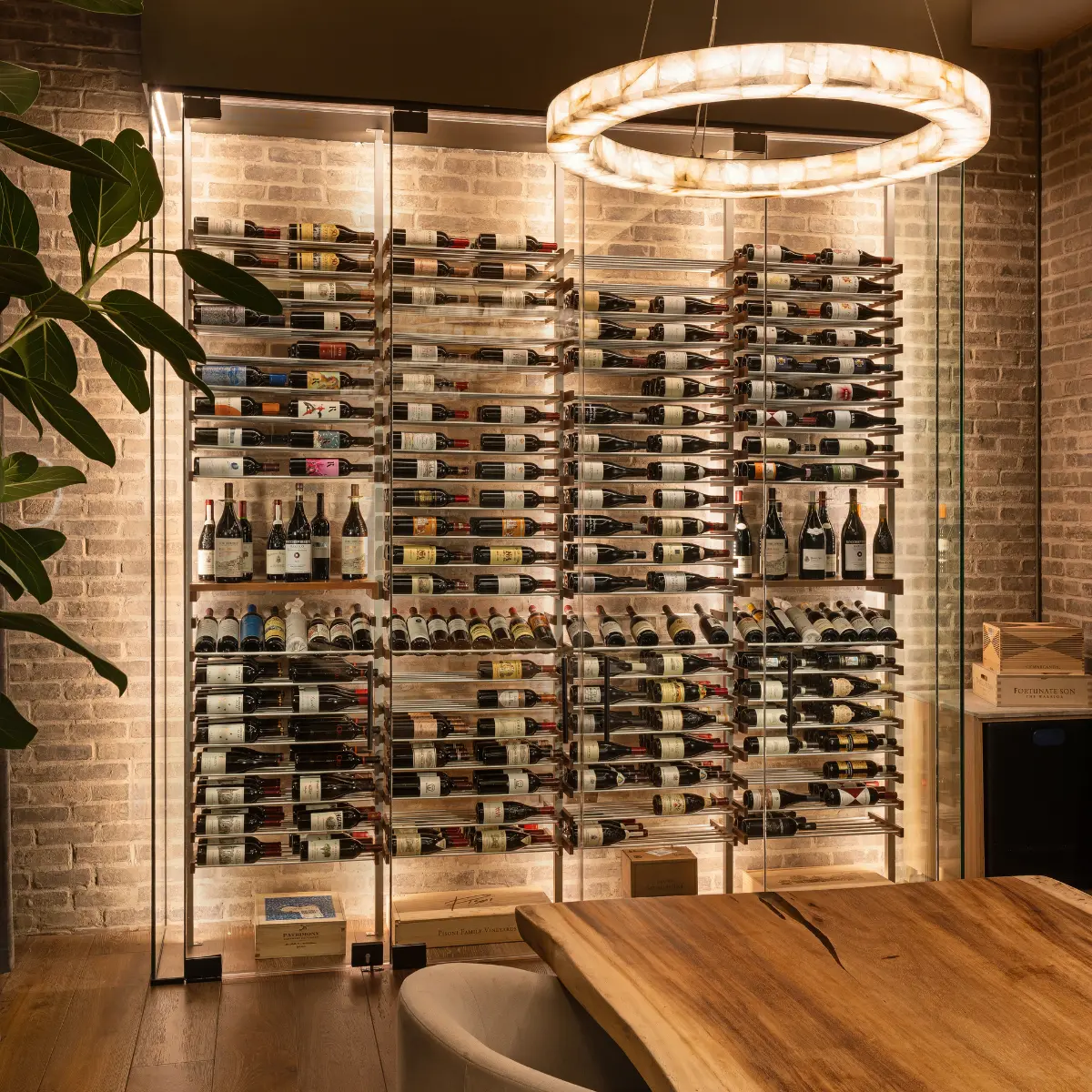
Why Hospitality Wine Cellars Matter
Today’s travelers and diners expect immersive, memorable environments. For boutique hotels, Michelin-level restaurants, tasting lounges, and high-end developments, a glass-front wine display creates an immediate sense of luxury and intention.
Proven Impact on Revenue
Industry case studies from leading hospitality groups consistently show double-digit increases in wine program revenue when the collection is showcased rather than hidden.
When wine becomes part of the visual identity of a space, guests engage more deeply, and order more confidently.
Design Features Defining 2025 Luxury Hospitality Wine Cellars
Below are the elements we see shaping the next wave of high-end commercial wine cellar design:
1. Glass-Front, Floor-to-Ceiling Wine Displays
Modern hospitality cellars now serve as architectural focal points.
Floor-to-ceiling glass wine walls create a gallery-like experience and invite guests into the story of the collection.
2. Integrated LED Lighting for Ambience
Label-forward, LED-lit displays illuminate bottles with precision—elevating both the product and the surrounding atmosphere.
Lighting becomes an essential part of the guest journey, guiding attention without overwhelming the space.
3. Custom Racking for Mixed Bottle Sizes
Commercial wine programs require flexibility. Our custom racking systems accommodate:
Magnums
Split bottles
Library vintages
Oversized formats
Daily-use inventory
This ensures both functional storage and high-impact display.
4. High-Durability Materials
Hospitality environments demand longevity.
We design with materials that are:
Scratch-resistant
Temperature-stable
Textural and tactile
Visually elevated
Common finishes include reeded glass, metal racking systems, natural stone, and engineered woods suited for high-traffic applications.
5. Concealed Climate Control Systems
Climate performance matters—but the equipment shouldn’t be seen.
Our custom, concealed refrigeration systems maintain precise temperature and humidity while preserving a seamless aesthetic.
6. Integrated Tasting & Lounge Moments
The most memorable hospitality wine cellars do more than display—they create a place to dwell.
We incorporate:
Custom seating
Tasting counters
Bar elements
Functional flow for staff and guests
These additions turn a wine cellar into a signature experience.
Hospitality Design Is About Memories, Not Just Materials
A well-designed commercial wine cellar is a powerful storytelling tool. It elevates the brand, enhances the dining or lodging experience, and becomes a feature guests remember long after they’ve departed.
If you’re designing or renovating a hotel, restaurant, bar, tasting room, or luxury development, the right wine cellar can become one of your most valuable assets.
FAQ: Hospitality & Commercial Wine Cellar Design
What makes a wine cellar valuable in a hospitality setting?
A wine cellar adds both functional and experiential value. In hotels and restaurants, a well-designed cellar enhances wine preservation, elevates the guest experience, and often increases wine program revenue by displaying the collection in a visually compelling way.
Do commercial wine cellars require special climate control?
Yes. Commercial and hospitality wine cellars must maintain stable temperature and humidity levels, typically around 55°F and 60–70% humidity. Hidden or integrated cooling systems are ideal for maintaining climate consistency without disrupting the design aesthetic.
What are the most popular wine cellar design trends for restaurants and hotels in 2025?
Current trends include glass-front displays, floor-to-ceiling racking, integrated LED lighting, mixed-bottle storage layouts, natural textured materials, and cellar spaces that double as tasting areas or experiential showcases.
Can a wine cellar increase revenue for a restaurant or hotel?
Absolutely. Industry case studies show that showcasing the wine collection—rather than storing it out of sight—often leads to a double-digit increase in wine program revenue due to improved visibility, perceived value, and guest engagement.
What materials are best for high-traffic hospitality wine cellars?
Durable materials like metal, stone, reeded or tempered glass, and engineered shelving are ideal. These materials withstand heavy use while still offering a polished, luxury aesthetic suitable for premium guest environments.
How do I choose the right wine racking system for a commercial space?
Consider capacity, bottle variety, accessibility, and visibility. Label-forward racks, mixed-size shelving, and modular systems are common in hospitality environments because they maximize storage while enhancing presentation.
Do wine cellars need to be fully enclosed?
Not always. Many modern hospitality wine cellars use glass partitions or partial enclosures that define the space while keeping the collection climate-controlled. The key is ensuring the cooling system can maintain consistent temperature and humidity.
Can I integrate seating or a tasting area into a commercial wine cellar?
Yes. Many high-end restaurants and boutique hotels include tasting nooks, lounge seating, or bar elements to create immersive guest experiences. This enhances both storytelling and engagement around the wine program.
Explore More Hospitality Wine Cellar Projects
See how we bring these principles to life in custom projects across the country - Portfolio